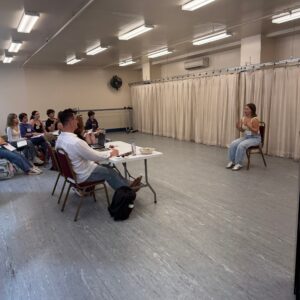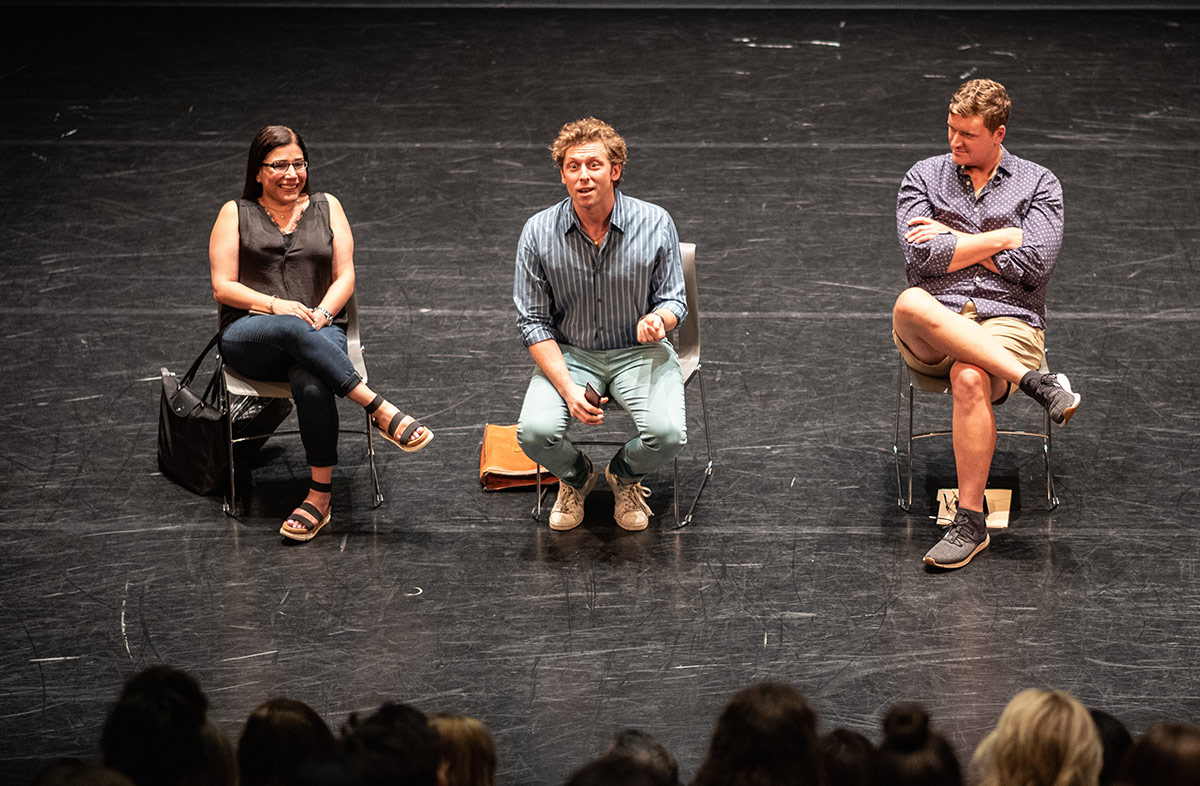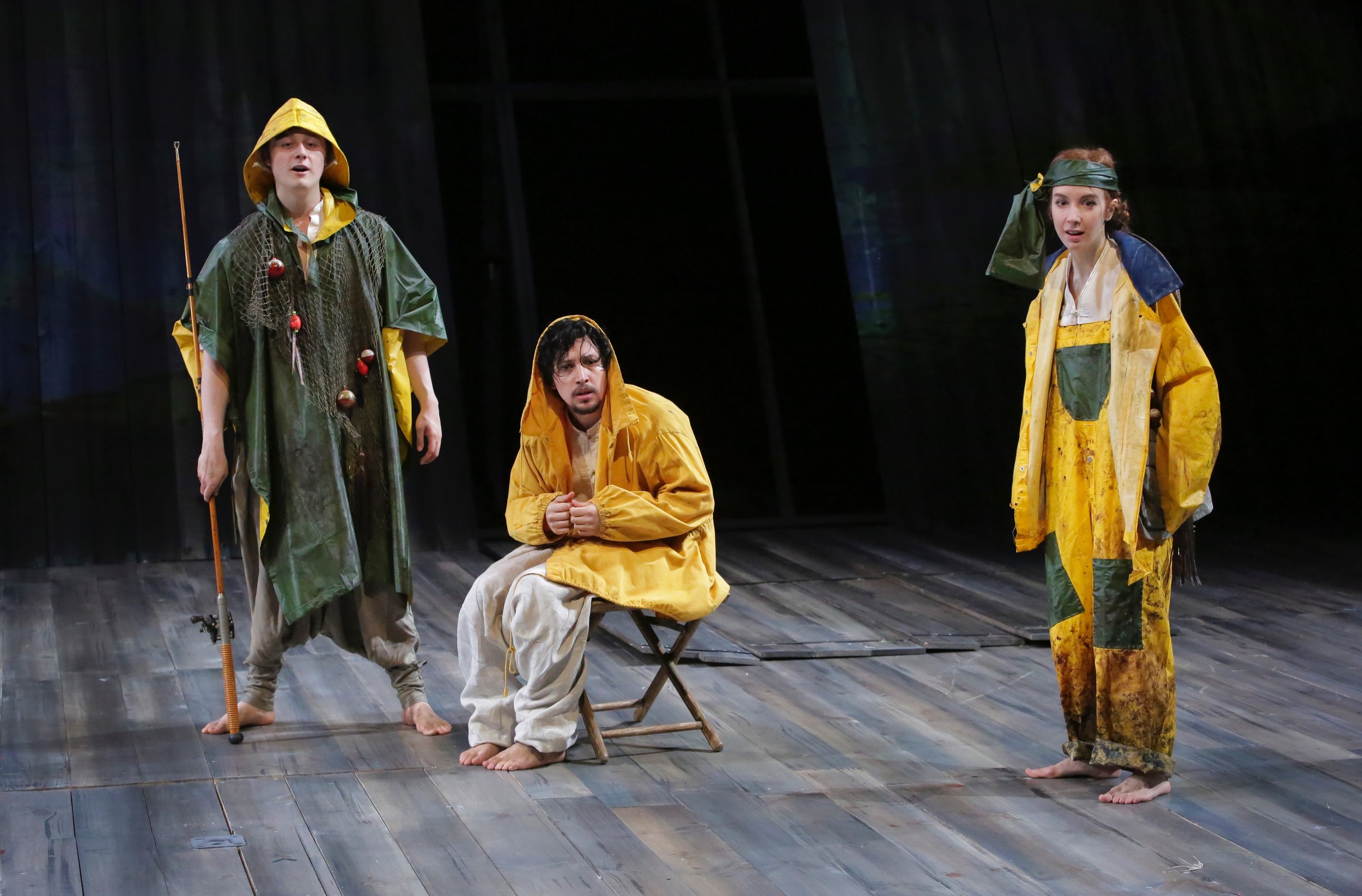
Time and again I find myself giving my essay students the same advice that I give my acting students. It’s the same advice I know they are getting from their song and monologue coaches. The same advice I got as an acting student from my teachers at Juilliard. In fact, many of the principles that we apply to performance (and writing) are helpful principles for life in general. As Charlie is fond of saying: “It’s a holistic process!”
Here are some examples of what I’m talking about vis-à-vis essays:
- Your vulnerability is your strength!
Many students are laboring under the false impression that they are supposed to use their college essay as a bragging session. “I’m so great and these are all the excellent things I’ve done”, or “I had this one challenge in life but I’ve completely conquered it and I’m perfect now” (I’m being reductive but you get what I mean). On the contrary, the absence of conflict makes scenes, monologues, and essays BORING. Lead with your vulnerability. Be candid about your insecurities, your failings, and your inner feelings. This will make your essay 100x more captivating than a prose version of your résumé. - Don’t be afraid to kill your darlings
Many actors (even professionals) struggle to take notes because they feel like they got it “right” the first time. Similarly, once they’ve finally banged out a full-length draft of their Common App essay, many students are resistant to changing and/or cutting their work. In both situations you have to find the balance between over and under-preparation. Just like rehearsal, revision is a crucial part of the writing process. It can feel scary to cut a sentence you liked or reorder the thoughts in a paragraph, but I guarantee you, you’ll come out the other side with a stronger, more streamlined essay. If you give yourself over the editing and revision process you’ll be shocked at how your essay evolves from the first draft to the final product, and at the discoveries you’ll make along the way. - Specificity is key
A good actor moves beyond general moods like “happy”, “sad”, “angry”, and creates an intricate, moment-to-moment tapestry of actions, thoughts, and reactions. The best essays do the same thing. So you’ve decided to write about your grandma? Many people will write a version of The Grandma Essay for their Common App. Write the version that only you can write. Include specific anecdotes and examples from your life. Think cinematically, engage our five senses and drop us into a moment in time that illustrates your point. - “You start by starting”
One of my acting teachers used to say this when we got up to present a scene and were paralyzed for fear of getting it “wrong”. Taking that first beat, saying those first words can be scary. The answer is to not be precious about the work. A blank page can be intimidating, but think of the first few sentences you write as sketches. They don’t have to be brilliant. They don’t even have to be grammatically correct. Your first few sentences may have no bearing on what your finished essay looks like. The important thing is that you begin the work of articulating yourself. - Don’t get caught up in what “they” want to see
This is a losing battle. You’re never going to please everyone, and you will end up presenting a watered down version of yourself–on the page or in the audition room–if you try to contort yourself into some vague notion of what other people want. Follow your bliss. If you enjoy your essay, chances are the admissions committee will as well. - And lastly, HAVE FUN!
Applying for BFA programs is a massive undertaking. People are reading your words, listening to your ideas, and watching your work. You get to begin to declare yourself as an artist and a human being. Be kind to yourself and find the joy in this process.
About the Author

Natasha received her BA from Barnard, where she graduated Magna Cum Laude, and her MFA from Juilliard. While at Juilliard, Natasha received the Laura Pels Award, the Bill Irwin Scholarship, and the prestigious Goldman Fellowship for her teaching work. In the writing sphere, Natasha worked as a writing fellow at both Barnard and Juilliard; as well as working as a copywriter and grant writer. As an actor, Natasha has appeared at New York theaters including HERE Art Space, MCC, The Civilians, The Lark, and New York Performance Space (formerly PS 122). Regional credits include New York Stage and Film, SPACE on Ryder Farm, The Geva Theater, Merrimack Repertory Theater, The White Heron, The Cape Playhouse, Boston Court, and the Gulfshore Playhouse.
TV: Ground Floor (TBS); and Betas (Prime). Film: Odyssea (Slamdance) and Farah Goes Bang (TriBeCa). Upcoming: Space Cadet (Prime). Natasha also worked as a producer and on-set acting coach for the film The Unknown Country which premiered at SXSW in 2022.
As a director and teaching artist, Natasha has worked at Juilliard, PlayMakers Rep, The Vineyard, Shakespeare at the Manor, Luna Stage, Bellarmine Jefferson High-School, and with community programs like 52nd St. Project and Hunts Point Alliance for Children.